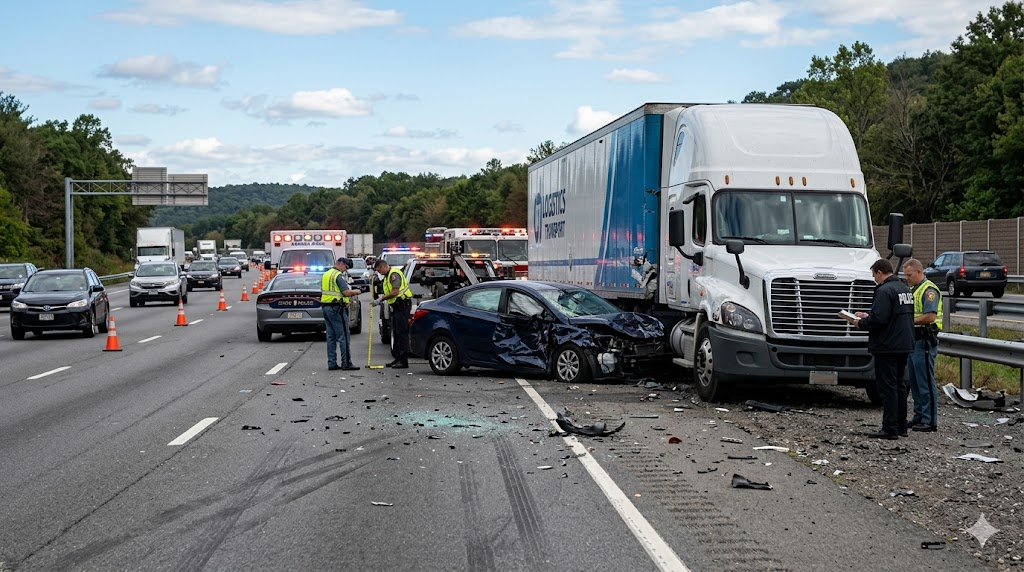

This guide is for South Carolina drivers, cyclists, and pedestrians injured in a hit and run accident in South Carolina who aren’t sure whether they can still pursue compensation. Many victims assume they have no legal options if the driver isn’t identified, but South Carolina law provides a clear path to recovery even in these cases. After reading this, you’ll understand how the process works and why a hit and run accident lawyer in South Carolina can make the difference between recovering what you’re owed and paying out of pocket.
What SC Law Requires of You After a Hit and Run Accident in South Carolina
South Carolina law requires you to report any accident involving injury, death, or property damage over $1,000 to law enforcement. In a hit and run, that means calling 911 immediately before moving your vehicle, contacting family, or searching for witnesses.
The police report generated at the scene serves two functions in a hit and run claim. First, it creates an official record that the crash happened and that the other driver fled. Second, it triggers the documentation chain your uninsured motorist insurer will require before processing a claim. Without a police report, most UM carriers will deny the claim outright.
While waiting for law enforcement, photograph everything you can: vehicle damage, your visible injuries, the surrounding road and intersection, and any debris left behind by the fleeing vehicle. Note the direction the driver fled, any partial license plate information, vehicle color, make, or distinguishing features. That information becomes part of the investigative record and occasionally leads to identification.
Your Primary Recovery Path When the Driver Fled
When the at-fault driver can’t be identified or located, your own auto insurance policy becomes the primary vehicle for compensation specifically through uninsured motorist (UM) coverage.
South Carolina law requires every auto insurer operating in the state to offer UM and underinsured motorist (UIM) coverage to policyholders. Unless you signed a written rejection of that coverage at the time of your policy, it’s almost certainly included. This matters enormously in hit and run situations: your own UM policy steps into the position of the fleeing driver and covers your injuries up to your policy limits.
How Uninsured Motorist Coverage Applies After a Hit and Run
UM coverage in a hit and run claim works differently than in a standard uninsured driver case in one key way: physical contact. South Carolina requires that the fleeing vehicle make physical contact with your vehicle or person for UM coverage to apply. If you swerved to avoid a driver who fled and crashed into a guardrail with no direct contact from the other vehicle, your UM claim faces a more complicated legal path.
Your UM policy covers bodily injury: medical expenses, lost wages, pain and suffering, and other compensatory damages. Property damage from a hit and run is handled separately, typically through your own collision coverage. Understanding which portion of your policy covers which loss is part of what an attorney clarifies from the first consultation.
What If You Don’t Have UM Coverage?
If you rejected UM coverage in writing when your policy was issued, your recovery options narrow significantly. You can still pursue the at-fault driver directly if law enforcement later identifies them but until that happens, civil action stalls.
This is one of the most common situations Spartan Law attorney Thomas Conits encounters: a victim with no UM coverage who assumed it was automatically included. South Carolina’s rejection-in-writing requirement protects consumers from being unknowingly stripped of that coverage but many people sign the rejection without fully understanding what they’re giving up. If you’re unsure whether your current policy includes UM, call your insurer and ask specifically before you need it.
Building a Hit and Run Claim Without a Known Defendant
Pursuing a UM claim against your own insurer is not a passive process. Your insurer will investigate the claim, evaluate the evidence, and in many cases dispute aspects of liability or injury severity even though you’re their own policyholder. They share the same financial incentive to minimize payouts as any other insurer.
An attorney builds the claim the same way as a standard car accident case: medical records, documented financial losses, impact logs for pain and suffering, and expert analysis where needed. What’s different is the absence of a defendant to depose or a third-party police report capturing the at-fault driver’s account. Every piece of corroborating evidence, dashcam footage, intersection cameras, witness statements, and physical debris from the fleeing vehicle carries extra weight precisely because the central defendant is absent.
For the broader legal context of how SC car accident claims work, including fault rules, compensation categories, and the claims process the car accident attorney South Carolina guide covers the framework in full. Hit and run claims operate within that same system, with UM coverage as the mechanism that makes recovery possible when fault can’t be attributed to an identified driver.
Property damage claims may also involve vehicle and property damage recovery through your collision coverage, separate from your bodily injury UM claim. These are distinct processes with separate adjusters and separate timelines. Keeping them organized matters.
What a Hit and Run Victim in South Carolina Should Do Next
A hit and run strips you of the most straightforward element of any car accident claim: a known at-fault driver. South Carolina’s UM framework exists because the law recognizes that victims of fleeing drivers shouldn’t be left to cover those losses on their own.
The SC Department of Public Safety records hit and run crashes as a distinct category annually and for every one of those cases, the path to compensation runs through your own policy, your own documentation, and your own legal representation. A hit and run accident lawyer in South Carolina who knows how UM claims work can move that process from confusion to resolution without you having to figure out the system under duress.
Speak With a SC Hit and Run Attorney at No Cost
Spartan Law offers a free, no-obligation case review for hit and run victims across South Carolina. Attorney Thomas Conits will walk through your insurance coverage, assess your claim’s strength, and explain your realistic options before you commit to anything.
Request your free case review or call 864-777-1000 directly. No upfront costs. You pay nothing unless your case is won.
Frequently Asked Questions
1. Can I file a claim if the hit and run driver was never caught?
Yes. South Carolina’s UM coverage applies when the at-fault driver can’t be identified, including hit and runs. You file through your own insurer instead of a third party. Requirements include physical contact and a police report. Your insurer will investigate, so having an attorney helps ensure the claim is handled properly.
2. How long do I have to file a UM claim after a hit and run in South Carolina?
Your UM claim requires prompt notice to your insurer, often within days of the crash. The lawsuit itself follows South Carolina’s three-year statute of limitations. These are separate deadlines, and missing the insurer’s reporting window can lead to denial even if you’re still within the three-year limit.
3. What if the hit and run driver is identified later?
If the fleeing driver is later identified, your claim can shift from a UM claim to one against the at-fault driver’s insurance. If they’re uninsured, UM still applies; if underinsured, UIM covers the gap. An attorney can coordinate all available coverage.
4. Does my UM coverage pay for vehicle damage in a hit and run?
Generally, no. UM bodily injury coverage pays for medical costs, lost wages, and pain and suffering. Vehicle damage is handled through collision coverage, which has its own deductible. Without collision coverage, recovering property damage in a hit and run is much harder.
5. What if I was on foot or riding a bicycle when the hit and run happened?
Pedestrians and cyclists in hit and run crashes can use their own UM coverage, even if not in a vehicle. If uninsured, a household member’s policy may apply. An attorney can help identify all available coverage.
Key Takeaways
- South Carolina requires physical contact for uninsured motorist (UM) coverage in hit and run cases; no-contact crashes are harder to recover.
- UM coverage is offered by all SC insurers and applies unless rejected in writing.
- A police report is required for most UM claims, so calling 911 at the scene is essential.
- UM covers bodily injury damages, while vehicle damage is handled through collision coverage.
- The three-year statute of limitations applies, but insurers also require prompt reporting deadlines.