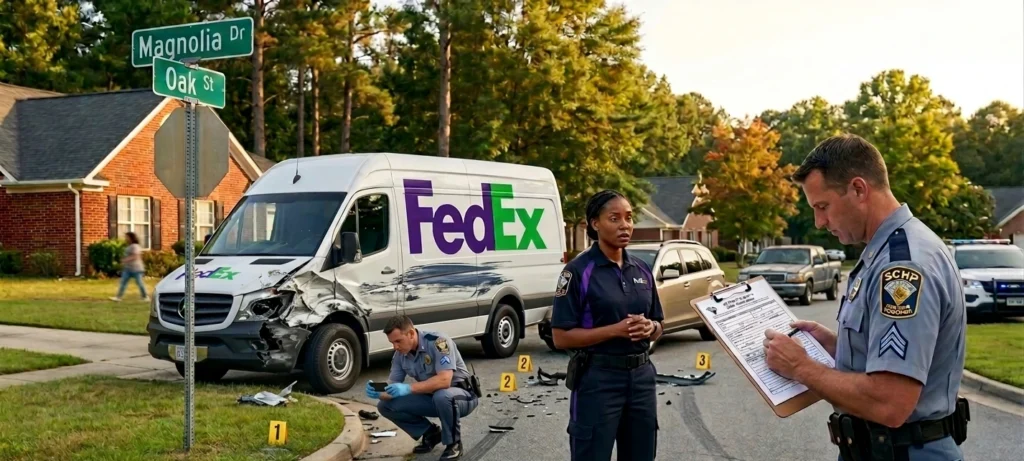
South Carolina victims hit by FedEx Ground trucks are routinely told the driver works for an independent company, not FedEx, so FedEx bears no responsibility for the crash. That position is FedEx’s opening defense, not the final word. This page explains how FedEx’s contractor structure works, how South Carolina courts have responded to it, and why victims often have stronger grounds to pursue FedEx directly than FedEx’s insurer wants them to believe.
FedEx Driver Accident Liability South Carolina: Is FedEx Responsible for Crashes Caused by Its Drivers?
FedEx Ground restructured its delivery network in the early 2000s, replacing employee drivers with independent service providers (ISPs). Each ISP owns trucks, hires drivers, and contracts with FedEx, creating a layer between the company and its drivers.
This structure underpins many FedEx driver accident liability South Carolina arguments: FedEx claims drivers are ISP employees, not its own, to avoid vicarious liability. However, courts nationwide, including in South Carolina, have challenged this defense based on how FedEx Ground actually operates.
What Courts Have Found About FedEx’s Contractor Defense
FedEx’s independent contractor defense has often failed under “right to control” analysis, with courts finding enough operational control to support FedEx driver accident liability South Carolina claims beyond a true contractor relationship.
Courts have identified that:
- FedEx dictates delivery routes and sequence through its systems
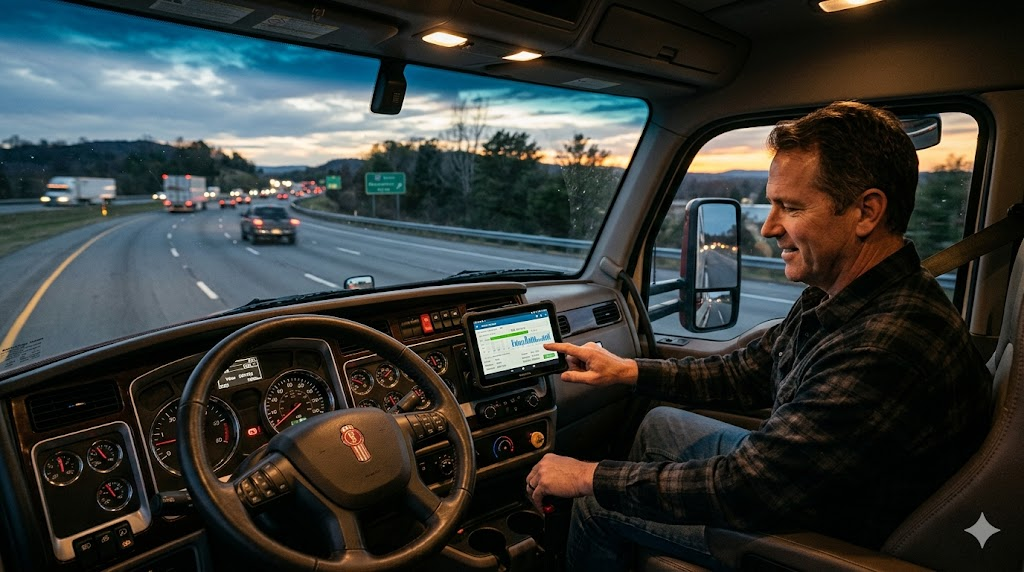
- FedEx tracks compliance via package scanning at each stop
- FedEx sets delivery windows that control driver pace
- FedEx requires FedEx branding on trucks and uniforms
- FedEx monitors performance and can terminate ISP contracts
- FedEx mandates FedEx-approved driver training programs
Because FedEx controls the route, pace, appearance, and consequences of non-performance, courts often find the independent contractor label does not reflect reality.
South Carolina’s Right to Control Test and How It Applies to FedEx
South Carolina courts use the “right to control” test, focusing on who controls how, when, and where work is done, not contract labels. Applied to FedEx Ground, the test supports liability because FedEx controls routes through its software, schedules through delivery windows, appearance through branding and uniforms, training through approved programs, and consequences through ISP contract termination, factors that often indicate a controlling employer despite the contractor structure.
The Difference Between Vicarious Liability and Direct Negligence Against FedEx
Two legal theories can reach FedEx and may be pursued together. Vicarious liability ties FedEx to a driver’s negligence through the right to control test, while direct negligence focuses on FedEx’s own conduct.
FedEx’s direct negligence claims include:
- Negligent supervision: failure to act on unsafe driving flagged by monitoring systems
- Negligent hiring standards: inadequate or unenforced driver qualification rules
- Delivery quota pressure: unrealistic delivery windows leading to fatigue or speeding
These theories apply broadly to commercial vehicle cases involving corporate defendants in South Carolina.
The Insurance Coverage That FedEx’s Contractor Defense Is Designed to Protect
FedEx’s insurer has a financial incentive to maintain the contractor defense because it limits which policies apply. If the case is confined to the ISP, only its auto policy is available. If FedEx’s liability is established, its broader coverage may also apply.
Typical coverage layers in a FedEx Ground crash include:
- ISP commercial auto policy: usually $300,000 to $1,000,000
- FedEx Ground coverage: applies when control or direct negligence is shown
- FedEx Corporation coverage: may apply in cases of gross negligence or systemic failures
Pursuing all available coverage, rather than stopping at the ISP policy, requires understanding the full liability structure from the start.
Evidence That Establishes FedEx’s Liability in South Carolina Courts
Building a case against FedEx requires evidence showing its operational control and linking that control to the crash. That evidence exists and must be preserved quickly.
Key evidence in FedEx Ground liability cases includes:
- Package scanning and route data: timestamped record of stops and compliance
- Delivery window records: show if schedules required unsafe driving
- Driver qualification records: confirm training, testing, and CDL verification
- ELD and black box data: track hours, speed, and location, often overwritten in 30 days
- Performance monitoring records: show prior unsafe behavior and FedEx’s response
A legal hold letter should be sent to FedEx Ground and the ISP within 48 hours to preserve this evidence.
FedEx’s Defense Is a Starting Position, Not an Ending One
FedEx’s contractor defense is most effective when it is not challenged. When it is tested under South Carolina’s right to control analysis, supported by preserved operational evidence and pursued alongside all available insurance coverage, courts have often scrutinized and limited its reach.
Thomas Conits at Spartan Law has represented injury victims across South Carolina since 2021. He handles FedEx accident cases directly, from initial consultation through resolution, focusing on identifying liable parties, preserving evidence early, and pursuing all available coverage.
FedEx Driver Accident Liability South Carolina: Control, Coverage, and Claims
FedEx’s contractor defense is often presented as a barrier to recovery, but it is not the final answer in South Carolina. Courts focus on real operational control rather than contract labels, and evidence frequently shows FedEx’s role in routing, scheduling, training, and performance monitoring. When that control is established, both vicarious liability and direct negligence claims may apply, expanding access to insurance coverage beyond the ISP policy. Because key evidence can disappear quickly, early action is essential to preserve records and support a full claim for recovery.
Get the Full Picture Before FedEx’s Insurer Defines Your Claim
FedEx’s insurer begins classifying your claim the moment the crash is reported. Without legal representation, that classification determines which policies are acknowledged and which are quietly left off the table. Call Thomas Conits at 864-777-1000 now or visit the free consultation page before you engage with any insurer on FedEx’s side. No fee unless we win.
Frequently Asked Questions
1. Can I sue FedEx Ground directly if their driver caused my crash in South Carolina?
Yes. South Carolina uses the right to control test, not contract labels. FedEx Ground’s routing, delivery windows, training, monitoring, and contract termination power can support direct liability alongside the ISP.
2. Has FedEx’s independent contractor defense succeeded in court?
Sometimes, but not consistently. Outcomes depend on jurisdiction and evidence of FedEx control. Strong operational control evidence often weakens the defense.
3. What is the difference between vicarious liability and direct negligence against FedEx?
Vicarious liability links FedEx to the driver through control. Direct negligence is FedEx’s own fault, such as poor training, supervision, or delivery pressure. Both can apply together.
4. How does FedEx’s insurance coverage change when direct liability is established?
If only the ISP is liable, only its policy applies. If FedEx is directly liable, FedEx Ground’s coverage may also be triggered, increasing total available compensation.
5. How quickly must evidence be preserved in a FedEx case in South Carolina?
Very quickly. Dashcam footage can be overwritten in days, and ELD data in about 30 days. A legal hold within 48 hours is critical to preserve key evidence.
Key Takeaways
- FedEx restructured its network in the early 2000s to use ISP contractors instead of employees, creating a liability buffer when crashes occur.
- South Carolina courts apply the right to control test, focusing on actual control rather than contract labels.
- FedEx Ground’s routing, delivery windows, monitoring, branding, training, and contract termination power support arguments against the contractor defense.
- Two liability theories can reach FedEx: vicarious liability based on control, and direct negligence based on supervision, training, and delivery pressure.
- Proving FedEx’s direct liability can trigger additional commercial insurance beyond the ISP policy, increasing potential recovery.
- Critical evidence like dashcam and ELD data can be lost within days or weeks, so a legal hold within 48 hours is essential.