
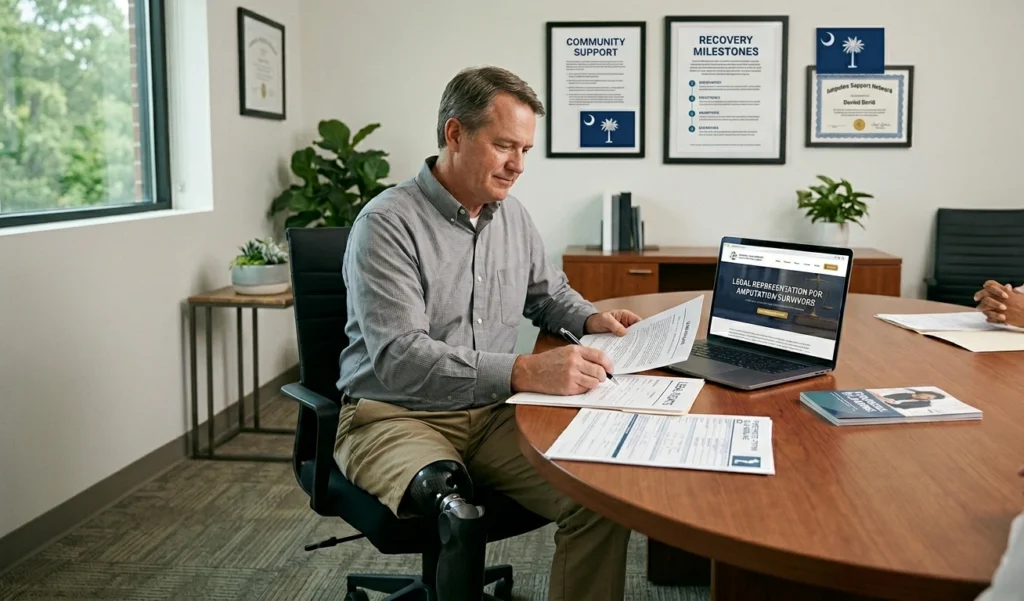
Life after limb loss legal rights include disability benefits, workplace protections, and injury compensation. Many victims miss available support. This guide explains key steps and how to protect your financial recovery.
Life After Limb Loss Legal Rights: Why Early Financial Decisions Matter
The first financial decisions after limb loss can significantly shape long-term stability. Immediate costs such as hospital bills, rehabilitation, prosthetics, and lost income quickly create pressure, while future expenses like ongoing therapy, replacement limbs, and reduced earning capacity may not yet be visible. Understanding life after limb loss legal rights is important because financial recovery often depends on acting early and pursuing all available support.
There are typically two key paths: benefits from government or employer programs, and potential legal claims against responsible parties such as negligent individuals, workplaces, or manufacturers. These can work together to cover both immediate and long-term needs. Delaying action may limit access to compensation or benefits, making early guidance essential to secure financial support and protect future quality of life.
Applying for SSDI After a Limb Loss in South Carolina
SSDI replaces income if a condition prevents work. Limb loss may qualify, but eligibility depends on your ability to perform substantial work.
What the SSA Looks at in Amputation Cases
The SSA uses its Blue Book listing for amputations under Section 1.20 to determine whether a condition meets automatic qualification. The key factors include:
- Amputation of both hands: Qualifies automatically under the listing
- Amputation of a leg at or above the ankle: Qualifies if mobility cannot be restored with a prosthetic to allow substantial work activity
- Single hand or single foot amputation: Requires additional evidence that remaining function and other health factors prevent full-time work
If the Blue Book listing is not met, the SSA evaluates your remaining work capacity based on medical evidence.
SSDI decisions take three to six months, and many claims are denied initially but approved on appeal.
Disability Accommodations: Your Rights Under the ADA
If you can work after amputation, the ADA requires employers with 15 or more employees to provide reasonable accommodations.
Reasonable accommodations in limb loss cases can include:
- Modified duties: Adjusting job tasks that require the lost limb while keeping the employee in their role
- Adaptive equipment: Providing or allowing use of specialized tools, keyboards, controls, or workstation modifications
- Schedule adjustments: Allowing modified hours to accommodate ongoing medical appointments and rehabilitation
- Transfer to a different position: If the current role cannot be modified, reassignment to a vacant position the employee qualifies for
Employers cannot terminate you solely for limb loss and must provide accommodations unless they show undue hardship.
Return-to-Work Rights After a Workplace Amputation in SC
Workers’ compensation provides return-to-work rights, including reinstatement to your prior job or placement in a suitable alternative if available, while vocational rehabilitation offers retraining and job placement if you cannot return to your previous role; for South Carolina workers whose amputation occurred on a job site and who may have claims against a third party beyond their employer, the workplace amputation injuries in South Carolina breakdown explains how workers’ compensation and third-party personal injury claims can work together.
Where a Personal Injury Claim Fits Into Life After Limb Loss Legal Rights
SSDI and ADA address recovery, while a personal injury claim determines who pays for the injury. If someone else’s negligence caused the amputation, whether a distracted driver, an equipment manufacturer, or a property owner, South Carolina law allows you to recover compensation that government programs do not provide. This can include pain and suffering, prosthetic costs, lost earning capacity, and long-term non-economic losses, as outlined in the amputation accident compensation South Carolina post, which breaks down the full scope of damages.
SSDI and personal injury settlements can coexist, but they must be carefully coordinated to protect both benefits and compensation. For South Carolina victims whose limb loss involved a spinal injury in the same accident, the spinal injury attorney South Carolina page explains how layered catastrophic claims are handled together.
Your Next Step After Limb Loss Should Not Be Guessing at Your Legal Rights
Spartan Law offers a free case review with no upfront cost. Call 864-777-1000 or schedule your consultation online.
The legal and financial steps after losing a limb are navigable. You do not have to figure them out alone.
Frequently Asked Questions
1. Does losing a limb automatically qualify me for SSDI benefits?
No. SSDI eligibility depends on your ability to work, and many claims are approved only after appeal.
2. Can my employer fire me after a workplace amputation in South Carolina?
No, if you can perform your job with accommodations. Termination based on disability may violate the ADA.
3. Can I collect SSDI and a personal injury settlement at the same time?
Yes, but settlements may affect certain benefits and require careful planning.
4. What is vocational rehabilitation and who pays for it after a workplace amputation in SC?
Vocational rehabilitation provides retraining and job placement and is covered by workers’ compensation.
5. How does a personal injury settlement affect my SSDI application timeline?
A personal injury settlement does not disqualify SSDI but may affect timing and should be structured carefully.
Key Takeaways
- SSDI eligibility requires proof that limb loss prevents substantial work activity.
- The ADA requires SC employers with 15 or more employees to provide reasonable accommodations for limb loss, including modified duties, adaptive equipment, and schedule adjustments. Termination based solely on the amputation is an ADA violation.
- South Carolina workers’ comp provides vocational rehabilitation when a return to your prior job is not possible after a workplace amputation. The employer’s insurer funds this benefit and the process is overseen by the SC Workers’ Compensation Commission.
- A personal injury claim against the at-fault party can run simultaneously with an SSDI application and workers’ comp claim. All three address different losses and do not cancel each other out.
- A personal injury settlement can coexist with SSDI, but settlement structure affects benefits eligibility. Coordinating legal counsel across both tracks is essential to protect your ongoing income.
- Spartan Law handles catastrophic injury claims across South Carolina with direct attorney access through Thomas Conits, no case managers, no fee unless compensation is recovered.