
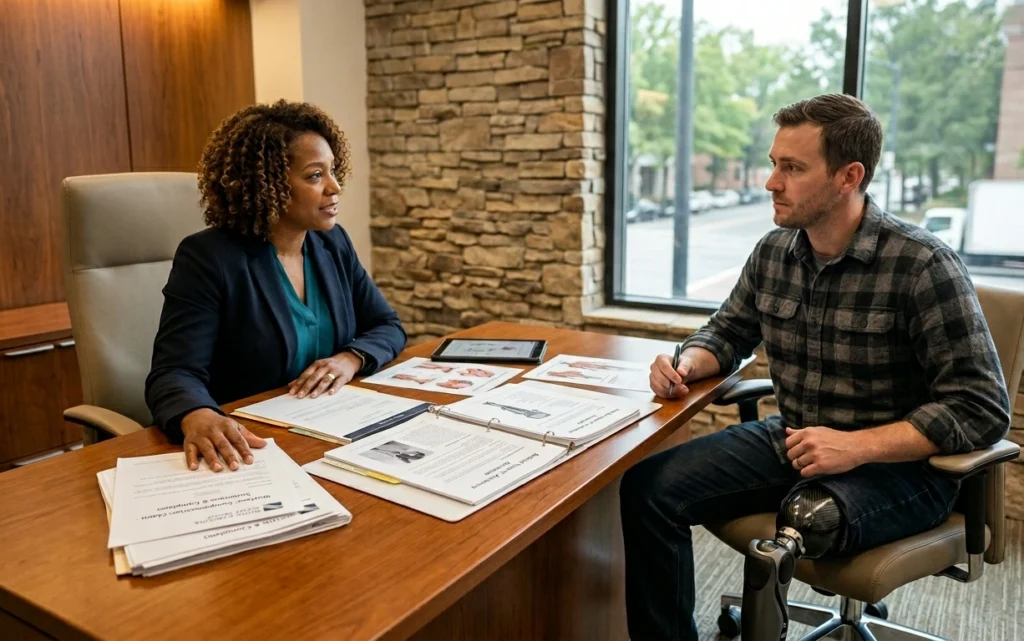
South Carolina residents facing limb loss need clear guidance on compensation and long-term costs. Amputation injury attorney South Carolina claims involve damages like prosthetics, lost income, and medical care. This guide shows how to evaluate your claim and take the right next steps.
Understanding Amputation Injury Attorney South Carolina Claims & Compensation
If you or a loved one suffered a life-altering limb loss, an amputation injury attorney South Carolina can help you understand what compensation may be available and how liability is proven under state law. Amputation injuries are among the most serious catastrophic injuries in personal injury law, often requiring lifelong medical care, prosthetics, and major changes to a person’s ability to work and live independently. In South Carolina, these cases can arise from devastating vehicle crashes, workplace accidents, medical complications, or defective equipment, and they often involve multiple parties responsible for the harm. Because the financial and emotional impact extends far beyond the initial injury, building a strong claim requires detailed medical evidence, expert evaluation, and a clear understanding of both economic and non-economic damages from the very beginning.
What Counts as an Amputation Injury in a South Carolina Claim?
Amputation injuries include both traumatic and surgical cases. Both qualify for compensation under South Carolina law and involve long-term impact.
South Carolina courts recognize two primary categories:
- Traumatic amputation: The limb is severed or destroyed at the moment of injury, most often in high-impact vehicle accidents, industrial equipment incidents, or severe crush injuries.
- Surgical amputation: The injured limb cannot be saved after the accident due to vascular damage, infection, or tissue death. A surgeon performs the removal as a medical necessity.
The cause of the underlying accident determines who is liable. The type of amputation determines the scope of damages. Both matter equally when building your claim.
Common Causes of Amputation Injuries in SC
Most amputation injuries are linked to identifiable acts of negligence. They typically involve negligence by a person, employer, or third party.
Car and Truck Accidents
Motor vehicle crashes are one of the leading causes of traumatic amputations in South Carolina. High-speed impacts, rollover collisions, and underride accidents involving tractor-trailers can generate enough force to crush or sever limbs at the scene. Even when the limb is not immediately lost, severe fractures, vascular damage, or tissue destruction may make amputation medically necessary later.
Truck accident cases are especially complex because responsibility often extends beyond the driver. A commercial carrier may be liable for unsafe driving practices, improper loading, or inadequate maintenance of the vehicle. In some situations, third-party contractors, cargo loaders, or maintenance companies may also share fault. These layered liability issues make early investigation critical, as key evidence like black box data, driver logs, and maintenance records can disappear quickly.
Workplace and Construction Accidents
Construction sites, manufacturing plants, and industrial facilities in South Carolina present a high risk for serious limb injuries. Heavy machinery, power tools, and moving equipment can cause catastrophic crush injuries or entanglements that result in immediate or surgical amputation. Common contributing factors include missing machine guards, lack of proper training, unsafe job site conditions, and violations of occupational safety standards.
These cases often involve two overlapping legal paths. Workers’ compensation may cover medical expenses and partial wage loss, but it typically does not compensate for pain and suffering. However, if a third party such as an equipment manufacturer, subcontractor, or property owner contributed to the accident, a separate personal injury claim may also be filed. That additional claim can significantly increase total recovery, especially in severe amputation cases.
Medical Malpractice
Not all amputations begin with traumatic accidents. Some occur in medical settings due to preventable errors. Surgical mistakes, failure to diagnose severe infections, or delayed treatment of vascular conditions can lead to tissue death and ultimately require limb removal. In these cases, the focus shifts to whether healthcare providers followed accepted medical standards of care.
Medical malpractice claims are highly technical and require strong expert testimony. Physicians must explain what should have been done differently and how earlier or proper treatment could have prevented the amputation. Under South Carolina law, these claims are valid when it can be shown that a healthcare provider’s negligence directly caused the injury or made the outcome significantly worse than it should have been.
Other Causes of Amputation Injuries
While vehicle crashes, workplace incidents, and medical errors account for many cases, amputations can also occur in other serious situations involving negligence or defective conditions.
Dog attacks are one example, especially when severe bites cause irreversible tissue damage or infection that leads to limb loss. Product liability cases are another, where defective machinery, unsafe power tools, or poorly designed equipment cause catastrophic injuries during normal use. Pedestrian accidents involving motor vehicles can also result in severe crush injuries to the legs or arms, sometimes requiring surgical removal. In agricultural settings, heavy machinery and equipment such as tractors or harvesters can cause devastating injuries when safety measures fail or operators make critical mistakes.
Each of these scenarios shares a common thread: the injury was not purely accidental but tied to a preventable failure in safety, care, or design.
What Damages Can You Recover in an SC Amputation Claim?
South Carolina law allows amputation injury victims to recover both economic and non-economic damages. Lifetime costs often exceed seven figures including prosthetics, care, and income loss.
Economic Damages
Key financial damages include prosthetics, surgery, therapy, lost income, and necessary home or vehicle modifications.
Non-Economic Damages
These damages cover physical and psychological impact, including:
- Pain and suffering, including phantom limb pain (the sensation of pain in a limb that no longer exists)
- Emotional distress and psychological trauma
- Loss of enjoyment of life
- Loss of consortium for affected spouses or family members
Phantom limb pain is a recognized condition that affects most amputation survivors and may require long-term treatment including medication and therapy. These ongoing costs should be included in your damages calculation.
How SC Law Applies to Amputation Injury Cases
South Carolina follows a modified comparative fault rule under SC Code Section 15-38-15, reducing compensation if you are partially at fault and barring recovery if fault exceeds 50%.
Insurance companies use this rule to reduce payouts by arguing the victim contributed to the injury. Legal representation before statements or settlement discussions helps protect your claim.
South Carolina allows wrongful death claims if an amputation leads to death, covering funeral costs, financial support, and loss of companionship under SC Code Section 15-51-10.
Prosthetics, Phantom Pain, and Vocational Rehab: The Long-Term Picture
Initial treatment costs are high, but long-term expenses continue for years and are often not fully covered by early settlements.
Common long-term costs often undervalued include:
- Prosthetic replacement cycles: Modern prosthetics improve rapidly, but each upgrade carries a high price point. Your settlement needs to account for multiple replacement units over your lifetime, not just the first device.
- Phantom limb pain management: Ongoing treatment can include mirror therapy, spinal cord stimulation, medication, and psychological counseling. These are recurring costs, not one-time expenses.
- Vocational impact: If you worked in construction, manufacturing, or any physical trade, returning to that exact job may not be possible. The income gap between your prior career and a new one you can access is a real, quantifiable loss that belongs in your claim.
Thomas Conits builds amputation cases with expert support, including life care planners and vocational economists, to make sure every long-term cost is documented before any settlement offer is evaluated. You can see how Spartan Law approaches catastrophic injury cases on the South Carolina personal injury practice page.
Why Amputation Claims Require Immediate Legal Action
Evidence in amputation cases is time-sensitive, including accident data, safety records, equipment logs, and medical timelines that may only be retained for a limited period.
South Carolina’s statute of limitations allows three years to file a claim under SC Code Section 15-3-530, but building a properly documented case takes months and starting late limits your options.
Why Amputation Victims Across SC Choose Spartan Law
Spartan Law handles complex personal injury cases involving catastrophic injuries, with cases managed directly by the attorney and requiring fast legal response due to early insurer involvement.
Some cases include settlements covering long-term medical costs, but outcomes depend on documentation, liability, and case complexity.
If your amputation involved a construction, brain, or spinal injury, related legal pages outline the specific liability and claim structure for those cases.
Amputation Injury Attorney South Carolina Compensation Guide: Final Thoughts
Amputation injury cases in South Carolina are among the most complex personal injury claims because they involve lifelong medical care, major financial losses, and permanent changes to independence and quality of life. A successful amputation injury attorney South Carolina claim requires more than proving how the injury happened, it depends on clearly establishing liability, documenting the full extent of damages, and projecting future needs such as prosthetic care, rehabilitation, and lost earning capacity.
Insurance companies often try to reduce these claims by disputing long-term costs or shifting blame, which makes early legal action especially important. A well-prepared case supported by medical experts, vocational analysis, and life care planning helps ensure that both economic and non-economic damages are fully considered. While no legal outcome can undo the injury, a properly built claim can provide the financial support needed to address the lifetime impact of the loss and move forward with stability.
Talk to an Amputation Injury Attorney in South Carolina Today
Spartan Law offers a free case review with no upfront cost, and you pay nothing unless compensation is recovered. Call 864-777-1000 or schedule your consultation online.
Frequently Asked Questions
1. Can I file a personal injury claim for an amputation caused by a workplace accident in South Carolina?
Yes, and you may have two claims. Workers’ compensation covers medical costs and partial wages, while a third-party claim can recover pain, suffering, and long-term losses. Both claims can run at the same time.
2. How much is an amputation injury case worth in SC?
Case value depends on age, occupation, severity, and liability. Lifetime prosthetic costs alone can reach seven figures for a young victim.
3. What is phantom limb pain and can it be included in a South Carolina injury claim?
Phantom limb pain is pain felt in a limb that has been amputated. It often requires long-term treatment and is included in compensation for pain, suffering, and future medical care.
4. How long do I have to file an amputation injury claim in South Carolina?
The standard statute of limitations is three years from the date of injury under SC Code Section 15-3-530. However, if a government entity, public employer, or state agency is involved, notice deadlines can be as short as 180 days. Waiting to consult an attorney risks losing the ability to file at all, and delays compress the time available to gather evidence properly.
5. What if my amputation was caused by a defective piece of equipment or machinery?
You typically have three years to file a claim under SC Code Section 15-3-530. If a government entity is involved, deadlines can be as short as 180 days, so early action is critical.
6. Do I need to prove the other party was 100% at fault to win an amputation claim?
South Carolina law allows you to hold manufacturers and sellers responsible for defective equipment. If the product was unsafe or lacked proper warnings, you may have a claim that can increase total compensation.
Key Takeaways
- Amputation injury claims in South Carolina cover both traumatic amputations that occur at the scene and surgical amputations performed as a medical necessity after the injury. Both qualify for full personal injury damages.
- Lifetime prosthetic costs for a single limb loss can exceed $1 million depending on the victim’s age and device type. This figure must be documented before any settlement is evaluated.
- Phantom limb pain is a medically recognized, ongoing condition that requires treatment for years and is fully compensable in an SC personal injury or workers’ compensation claim.
- Workplace amputations may support two simultaneous claims: a workers’ compensation claim and a third-party personal injury claim, with the latter covering pain, suffering, and full lost earning capacity.
- South Carolina’s three-year statute of limitations sounds generous, but building a complete amputation claim takes months. Government-related claims can carry notice deadlines as short as 180 days.
- Early legal involvement improves documentation, claim strength, and compensation outcomes.