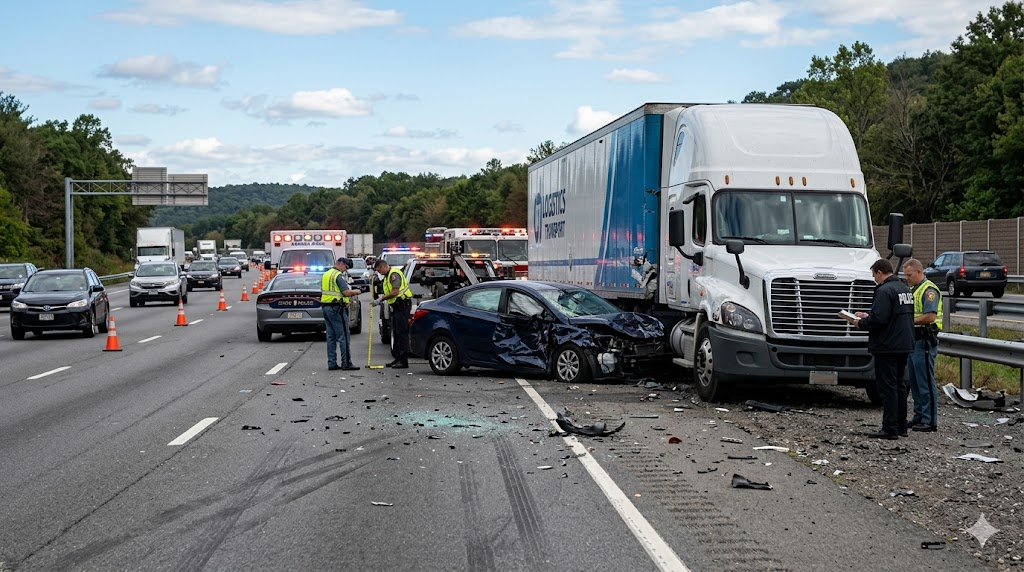

If you’ve been injured in a crash, a car accident attorney South Carolina drivers trust can help you understand your rights and avoid low insurance settlements. This guide explains how fault, coverage, and claims work so you can make informed decisions early.
How a Car Accident Attorney South Carolina Handles Claims from Day One
Car accident claims in South Carolina move through a predictable series of steps, but the decisions made in the first 48 hours often determine the trajectory of the entire case. Understanding the framework before you’re in a crisis makes every decision that follows faster and more effective.
After a crash, two parallel processes begin almost simultaneously. The first is your physical recovery getting treated, following up with specialists, documenting the medical impact. The second is the legal and insurance process, which starts the moment you report the accident to your insurer or the at-fault driver’s insurer contacts you.
South Carolina is an at-fault state, which means the driver responsible for causing the crash is in principle financially responsible for the resulting damages. In practice, that responsibility runs through insurance. You’ll typically file a claim either with your own insurer (who then pursues the at-fault driver) or directly with the at-fault driver’s liability carrier.
The legal framework governing personal injury claims in South Carolina including fault allocation, damage caps, and filing deadlines is covered in detail in the complete South Carolina personal injury guide. This page focuses specifically on the mechanics of car accident cases, where the rules have some important distinctions.
Who’s at Fault? Understanding SC’s Comparative Fault Rule
South Carolina uses a modified comparative fault system under SC Code § 15-38-15. The rule has one central mechanic that changes everything: you can recover compensation even if you were partially responsible for the accident as long as your share of fault is 50% or less. Your total award is then reduced by your percentage of fault.
Here’s what that looks like in practice. A driver runs a red light and hits your vehicle. The insurer argues you were also speeding and assigns you 20% of the fault. If your total damages were $80,000, you’d recover $64,000 80% of the full amount. That 20% fault assignment costs you $16,000. This is not theoretical. Insurance adjusters use this mechanism deliberately, analyzing police reports, witness statements, traffic camera data, and road conditions specifically to find ways to shift responsibility onto you.
When Both Drivers Share Fault
Multi-vehicle crashes and intersection accidents frequently produce disputed fault allocations. A four-way stop collision might involve one driver who failed to yield and another who was marginally over the speed limit. Both insurers will stake out positions that minimize their client’s financial exposure. Without your own legal representation, you’re effectively arguing your case against people who do this professionally.
The 50% threshold is a hard line. A driver found 51% responsible and recovered nothing. That makes the fight over fault percentages, not just the severity of injuries, one of the most financially consequential battles in any SC car accident claim.
What Insurance Actually Covers After a Car Crash
South Carolina requires all drivers to carry minimum liability coverage of $25,000 per person for bodily injury, $50,000 per accident, and $25,000 for property damage. Those minimums are low relative to the real cost of a serious injury. A single ER visit, one surgery, and two weeks of follow-up care can push past $25,000 without including lost wages, physical therapy, or long-term complications.
When the at-fault driver’s liability limits don’t cover your full losses or when the at-fault driver has no insurance at all your own policy becomes important.
Uninsured and Underinsured Motorist Coverage
South Carolina law requires insurers to offer every policyholder uninsured motorist (UM) and underinsured motorist (UIM) coverage. You can reject it in writing, but if you didn’t, it’s likely part of your policy. UM coverage applies when the at-fault driver carries no insurance. UIM coverage steps in when their limits are too low to cover your damages and the gap between their policy and yours is what’s available.
Uninsured motorist claims are also the primary avenue of recovery in hit-and-run accidents, where the at-fault driver can’t be identified or located.
Vehicle and Property Damage
Beyond bodily injury, your collision or the at-fault driver’s property damage liability should cover vehicle repair or replacement. South Carolina law also allows claims for vehicle depreciation loss the documented drop in your vehicle’s resale value after a structural repair, even when the repairs are completed perfectly. Many drivers are entitled to this recovery and never claim it because they don’t know it exists.
If your vehicle is totaled and you still owe more than its actual cash value, GAP insurance covers the difference between what the insurer pays and what you still owe the lender. GAP claims have their own filing procedures and are routinely underpaid without attorney oversight.
What Compensation Can You Recover?
South Carolina personal injury law allows car accident victims to pursue both economic and non-economic damages. The distinction matters because each category is calculated differently and subject to different types of evidence.
Economic damages are the quantifiable financial losses: medical expenses (current and projected future treatment), lost wages during recovery, reduced earning capacity if the injury affects your ability to work long-term, vehicle repair or replacement, and out-of-pocket costs like transportation to appointments and prescription medications.
Non-economic damages cover the human cost: physical pain and suffering, emotional distress, loss of enjoyment of life, and permanent disfigurement or disability. South Carolina does not cap non-economic damages in most personal injury cases which is significant when injuries are severe and the impact on daily life is substantial.
In crashes caused by a drunk driver or another party acting with willful disregard, punitive damages may also be available. These go beyond compensating the victim they’re designed to punish especially reckless conduct. Drunk driving accident cases in South Carolina are among the most common contexts where punitive awards are pursued.
The Statute of Limitations: Three Years, Hard Stop
South Carolina gives car accident victims three years from the date of the crash to file a civil lawsuit, under SC Code § 15-3-530. Miss that deadline and a court will almost certainly dismiss your case regardless of how clearly the other driver was at fault or how serious your injuries are.
There are narrow exceptions if the injured person was a minor at the time of the crash, the clock may toll until their 18th birthday. But the practical takeaway is this: treat the three-year window as a planning deadline, not a filing deadline. Evidence degrades. Surveillance footage is overwritten on 30- to 90-day cycles. Witnesses relocate and memories fade. Cases built early are stronger cases.
Claims involving government vehicles, a city bus, a county-maintained road that contributed to the crash may trigger notice requirements as short as 180 days. If a government entity might share liability, you need legal counsel involved immediately.
What a Car Accident Attorney Does That Changes the Outcome
Most people contact an attorney after they’ve already spoken with the at-fault driver’s insurer, provided a recorded statement, or received an initial settlement offer. That sequencing is costly. Here’s what changes when an attorney is involved from day one.
Evidence preservation moves immediately. Accident reconstruction experts can photograph skid marks, road conditions, and vehicle damage before they’re altered or erased. Black box data available from most vehicles manufactured after 2013 captures speed, braking, and steering input in the seconds before a collision and must be formally preserved quickly.
Recorded statements stop. Insurance adjusters are trained interviewers. A casual remark about feeling “fine” at the scene, or an incomplete answer about a pre-existing condition, can be replayed months later to minimize your injuries in the eyes of a jury or adjuster. Your attorney becomes the point of contact communications go through them, not you.
The full damage picture gets built correctly. Calculating compensation accurately requires projecting future medical costs, determining the impact on earning capacity, and documenting non-economic losses in a format that holds up in litigation. That process takes experts, time, and experience and skipping it consistently produces undervalued settlements.
Attorney Thomas Conits of Spartan Law handles cases statewide, from Greenville and Spartanburg in the Upstate down through Columbia, Charleston, and Myrtle Beach. He works on a contingency basis with no upfront fees, and no attorney’s fees unless your case is won. Past results are listed on the firm’s results page.
For crashes involving commercial trucks, the legal complexity increases significantly federal FMCSA regulations apply, liability extends to carriers and cargo companies, and evidence like driver logs must be preserved immediately. The South Carolina truck accident page covers that case type in full.
What Happens If You Were Hurt as a Passenger?
Passengers in car accidents have a distinct legal position: they are rarely if ever considered at fault for the crash. This means the 50% fault bar in SC’s comparative fault law almost never applies to you.
As a passenger, you can pursue a claim against the at-fault driver, the driver of the vehicle you were riding in (if they share fault), or both. If either driver was uninsured, your own UM coverage or the vehicle owner’s UM policy may provide coverage. Rideshare passengers Uber and Lyft riders injured in crashes have access to the rideshare company’s commercial liability policy, though the applicable coverage depends on the driver’s status at the time of the accident.
Why Speaking with a Car Accident Attorney South Carolina Early Makes a Difference
The decisions made in the hours and days after a car accident in South Carolina determine more than most people realize. How quickly you seek medical treatment, whether you preserve documentation, and whether you speak to the insurer before speaking to a car accident attorney in South Carolina each of these has a direct financial consequence.
You don’t need to have your facts perfectly organized to make that first call. Most attorneys, including Thomas Conits at Spartan Law, offer a free initial consultation specifically designed to help you understand your position and your options before committing to anything.
Talk With a South Carolina Car Accident Lawyer for Free
If you’ve been hurt in a crash anywhere in South Carolina, Spartan Law offers a free, no-obligation case review. Attorney Thomas Conits will assess your situation directly, explain what your claim may be worth, and outline the realistic path forward at no cost to you.
Request your free case review or call 864-777-1000. There are no upfront fees, and you owe nothing unless Spartan Law wins your case.
Frequently Asked Questions
1. What to Do After a Car Accident in South Carolina?
After a car accident in South Carolina, check for injuries, call 911, and get medical attention as soon as possible. You should also exchange information, document the scene, obtain a police report, and notify your insurance company promptly.
2. How Much Is an SC Car Accident Settlement?
An SC car accident settlement is based on factors like medical expenses, lost wages, property damage, and pain and suffering. The amount varies depending on the severity of injuries, available evidence, and each party’s share of fault.
3. Do I Need a Hit and Run Accident Lawyer in South Carolina?
A hit and run accident lawyer in South Carolina can help investigate the crash, gather evidence, and pursue compensation through uninsured motorist coverage if the driver is not identified. These cases are often complex, making legal guidance important for protecting your claim.
4. How Does an Uninsured Motorist Claim Work in South Carolina?
An uninsured motorist claim in South Carolina allows you to seek compensation through your own insurance if the at-fault driver has no coverage. You typically need to provide proof of damages, medical records, and cooperate with your insurer’s investigation.
5. Should I accept the insurance company’s first settlement offer?
Rarely. First offers are almost always issued before the full scope of your injuries is documented, before all your medical bills are in, before any long-term prognosis has been established, and certainly before future costs are calculated. Once you sign a release and accept a settlement, you permanently waive the right to pursue additional compensation, even if your condition worsens significantly. At minimum, have an attorney review any offer before signing anything.
6. Do I need a lawyer if the accident was minor and I wasn’t badly hurt?
Not necessarily, but consider this: soft-tissue injuries, whiplash, and concussions are routinely underestimated immediately after a crash because adrenaline masks pain. Symptoms often emerge or worsen in the 48–72 hours following the collision. A free consultation with a South Carolina car accident attorney costs nothing and takes under 30 minutes. Most attorneys will tell you honestly if your situation doesn’t warrant representation, which gives you clarity either way.
7. What if the accident was caused by a commercial truck?
Truck accident claims involve a separate legal framework federal FMCSA regulations apply to drivers and carriers, liability often extends to multiple parties beyond the driver, and evidence like electronic logging device (ELD) data must be formally preserved immediately or it may be lost. Commercial insurers also carry much larger policy limits and have experienced defense teams engaged from the moment a crash is reported. These cases require an attorney experienced specifically in commercial vehicle litigation, not just general personal injury practice.
Key Takeaways
- South Carolina’s modified comparative fault rule means you can recover damages if you’re 50% or less at fault but every percentage point the insurer successfully assigns to you reduces your payout dollar-for-dollar.
- The filing deadline for SC car accident lawsuits is three years from the crash date, but evidence like surveillance footage disappears within weeks, making early legal action critical to building a strong case.
- Uninsured motorist (UM) coverage which SC insurers must offer every policyholder is your primary avenue of recovery when the at-fault driver has no insurance or flees the scene.
- Vehicle depreciation loss is a compensable damage in South Carolina that most accident victims never claim because they’re unaware it exists; it covers the documented drop in resale value after structural repairs.
- Passengers in SC car accidents are rarely considered at fault and can pursue claims against both drivers involved, making their legal position among the strongest in any car accident scenario.
- A recorded statement made to the at-fault driver’s insurer before consulting an attorney can permanently reduce the value of your claim by contacting legal counsel before responding to any insurer contact.